

But sometimes, a willing parent does not make a willing child; especially once your toddler is mobile. I often hear parents lamenting how they have set aside story time with their toddler snuggled on their lap to no avail!
Some tips to encourage reading:
Don’t expect your toddler to sit still for a book
Toddlers need to move, so don’t worry if they are rolling around on the floor or even playing with a toy nearby. He may be moving, but there’s a good chance he’ll still be listening even if his eyes aren’t on the book.
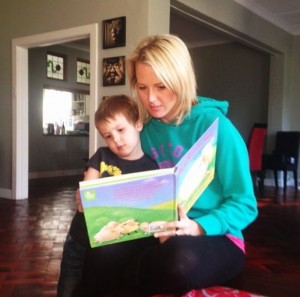
Choose engaging books
Books featuring animals or machines invite movement and making sounds. Books with flaps or different textures to touch keep hands busy. As your toddler gets older you can introduce books with more detailed illustrations.
Recite rhymes, sing songs, and make mistakes!
Pause to let your toddler finish a phrase or repeat a refrain. For example, Run, run as fast as you can, you can’t catch me, I’m…….”
Once your toddler is familiar with the rhyme or pattern or story in a book, make mistakes on purpose. You could take out the Kipper book and label it “Spot.”
Keep reading short and simple
Toddlers frequently have shorter attention spans than babies. Look for text that is short and simple. The story can end at any point. Don’t have a preconceived time limit for reading.
Establish a Reading Routine
Toddlers enjoy repetition and routine. If story time becomes part of a routine, your toddler is more likely to engage. Choose a time when your toddler is winding down. Using story-time as part of the bedtime ritual will ensure better listening and more go-to-sleep cooperation
Use your literary license
You are not obliged to read every word in the book!
Simplify the sentence structure, use repetition, and change more complex words so that your toddler understands and relates. In this way, you will have a greater variety of books to read.
I love Kipper’s Toybox by Mick Inkpen. This book is about dog called Kipper who finds a hole in his toybox and is worried that some of his toys may be missing. Kipper sets out to find out how this could have happened. The story is great for children from about 2,6 to 5 years old, but the text is far too complex for a 2,6 year old.
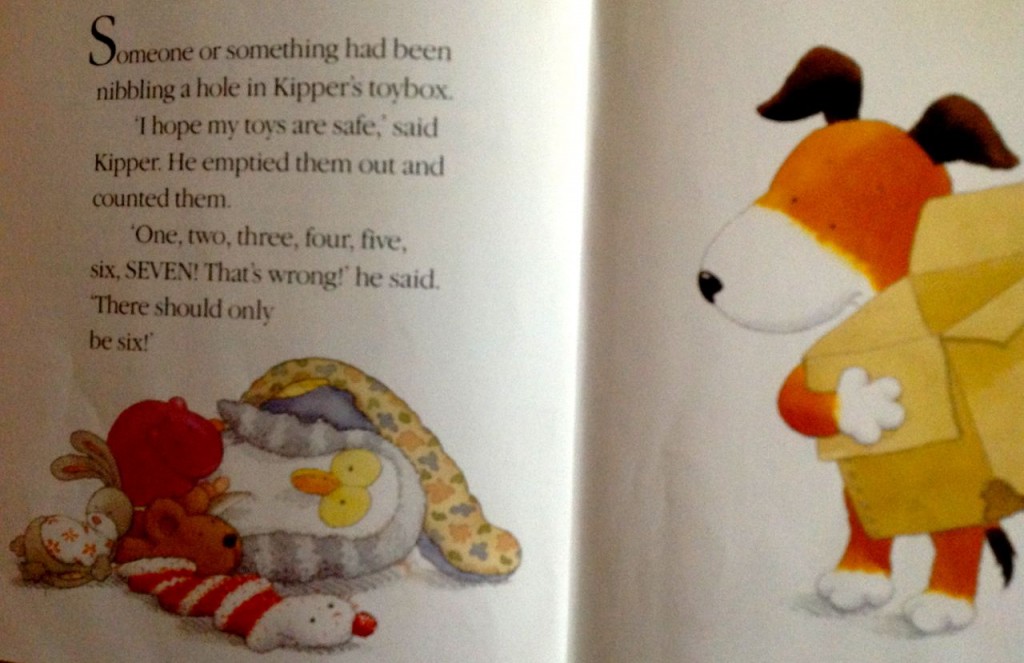
Here is an example of how you can simplify the text:
Hello Doggy!
This is Kipper.
Kipper’s toys.
Look! A hole in the box.
One, two, three, four five six, SEVEN!
Oh oh! Something is wrong.
Toddlers learn important things while reading: some of them just learn them standing up!
